


Popular Searches

Zoo News
October 2026
What happened in the Zoo this October?
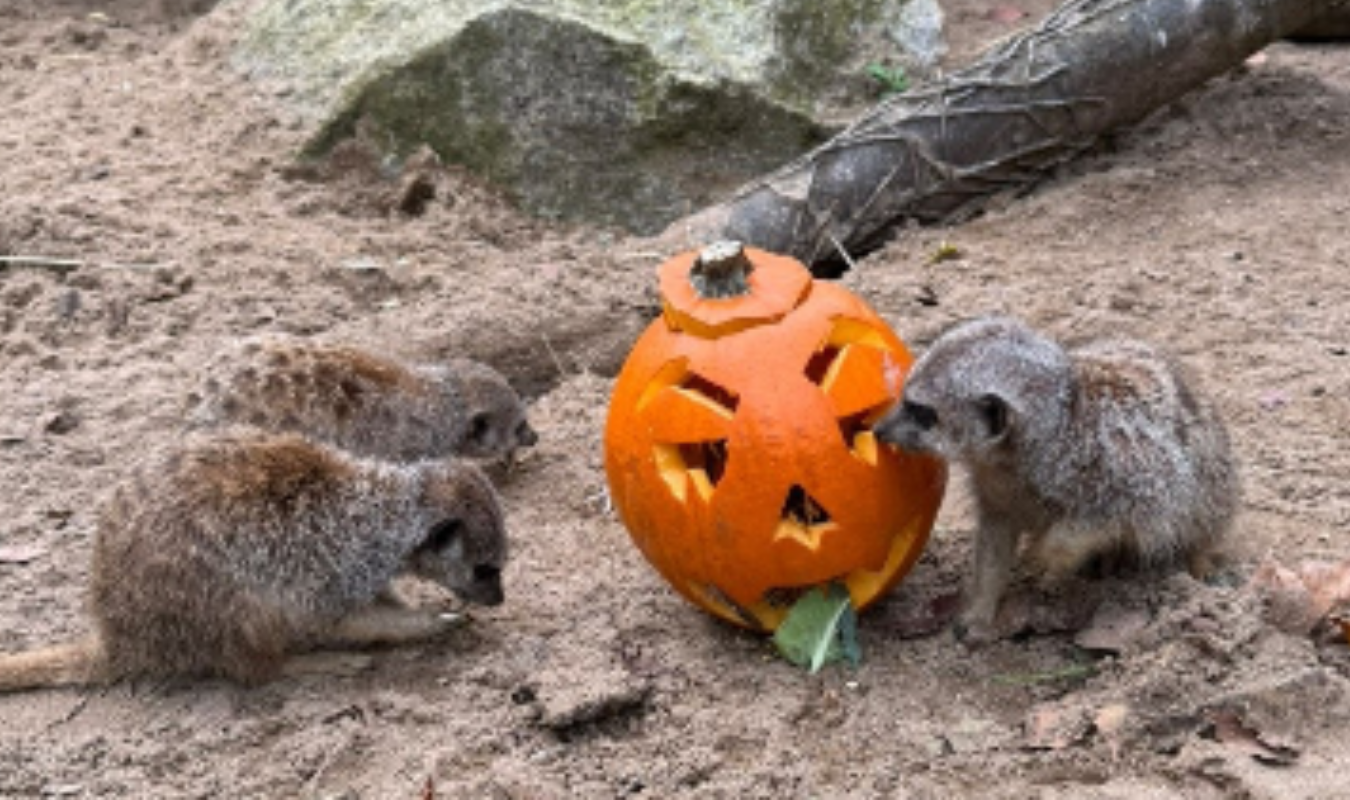
On a month where Emerald Park launched our Mega Monster Halloween Event and our highly anticipated After Dark Event, the Zoo was kept busy too. Our animals also enjoyed joining in on the festivities with some themed feeds and enrichment. From new habitats to celebrating our species and the team caring for them, we had a busy month in October. Read below to find out what the Zoo got up to this month!
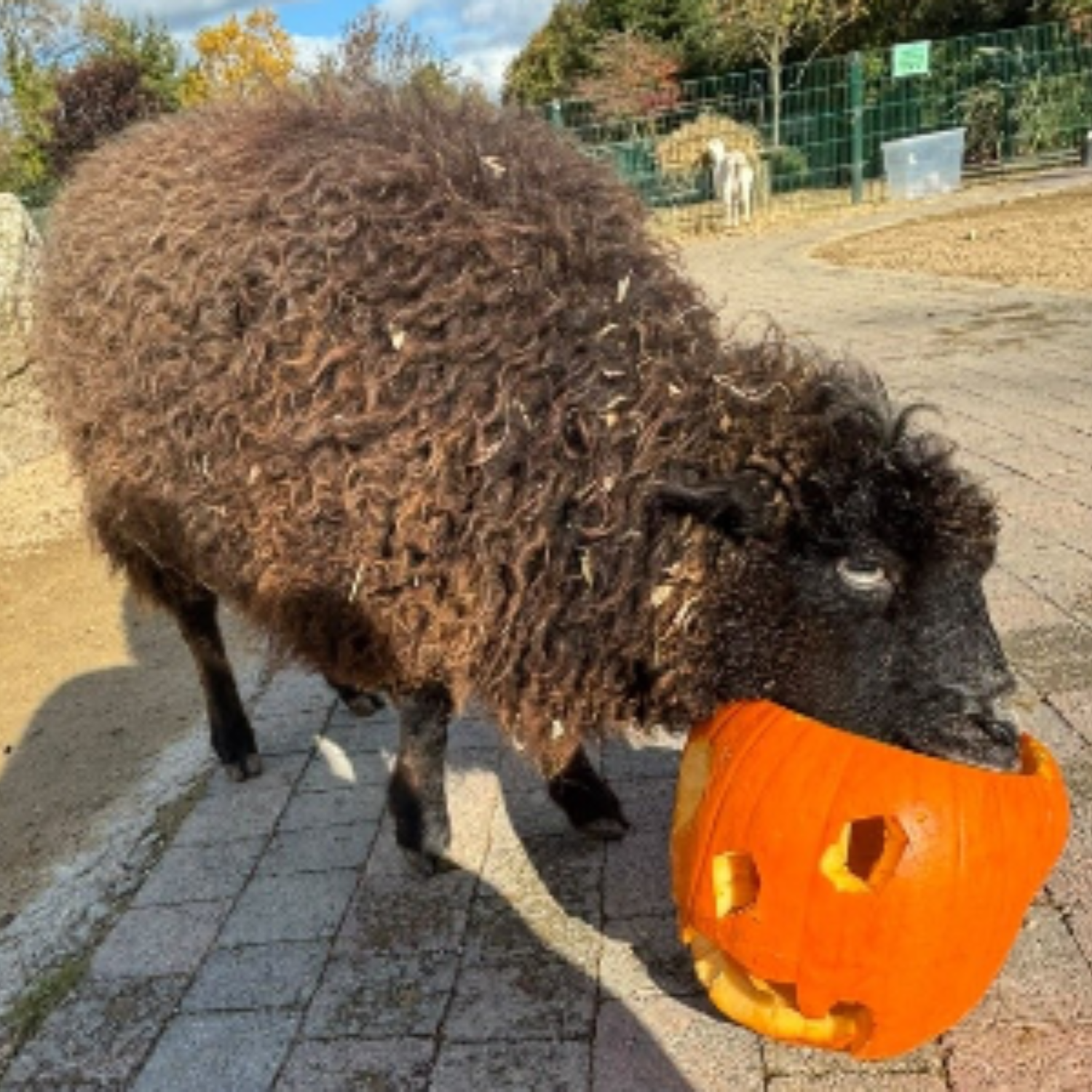
| Photo – one of our Ouessant Sheep (Ovis aries), Echo, enjoying a pumpkin – Kayleigh (Discovery & Learning) |
Celebrating international Zookeeper Day and World Animal Day
On October 4th, we honoured the commitment, skill, and compassion of keepers worldwide. The date honours St. Francis of Assisi, long celebrated at Barcelona Zoo since 1957 as the patron saint of animals. International Zookeeper Day (IZD) was established by the International Congress of Zookeepers (ICZ) in 2015 to recognize all professionals who dedicate their lives to caring for animals across zoos, aquariums, sanctuaries, rescue centres, parks, and reserves. The day coincides with World Animal Day, also observed on October 4, which celebrates animal welfare and the protection of biodiversity.
In Emerald Park, we greatly value our incredible Zookeeping team. Our animals need to be cared for 365 days a year which requires dedication and an incredible amount of passion. The teamwork and collaboration needed in this profession is often overlooked by the public. Zookeepers are responsible for preparing specialized diets, monitoring animal health, providing enrichment activities to encourage natural behaviours, and collaborating with veterinarians and conservation biologists to ensure the well-being of the animals in their care. Many of the species our keepers care for here in Emerald Park are endangered or critically endangered highlighting the importance of ex-situ conservation efforts in zoos around the world and in-situ conservation efforts carried out by conservationists in every corner of the Earth.
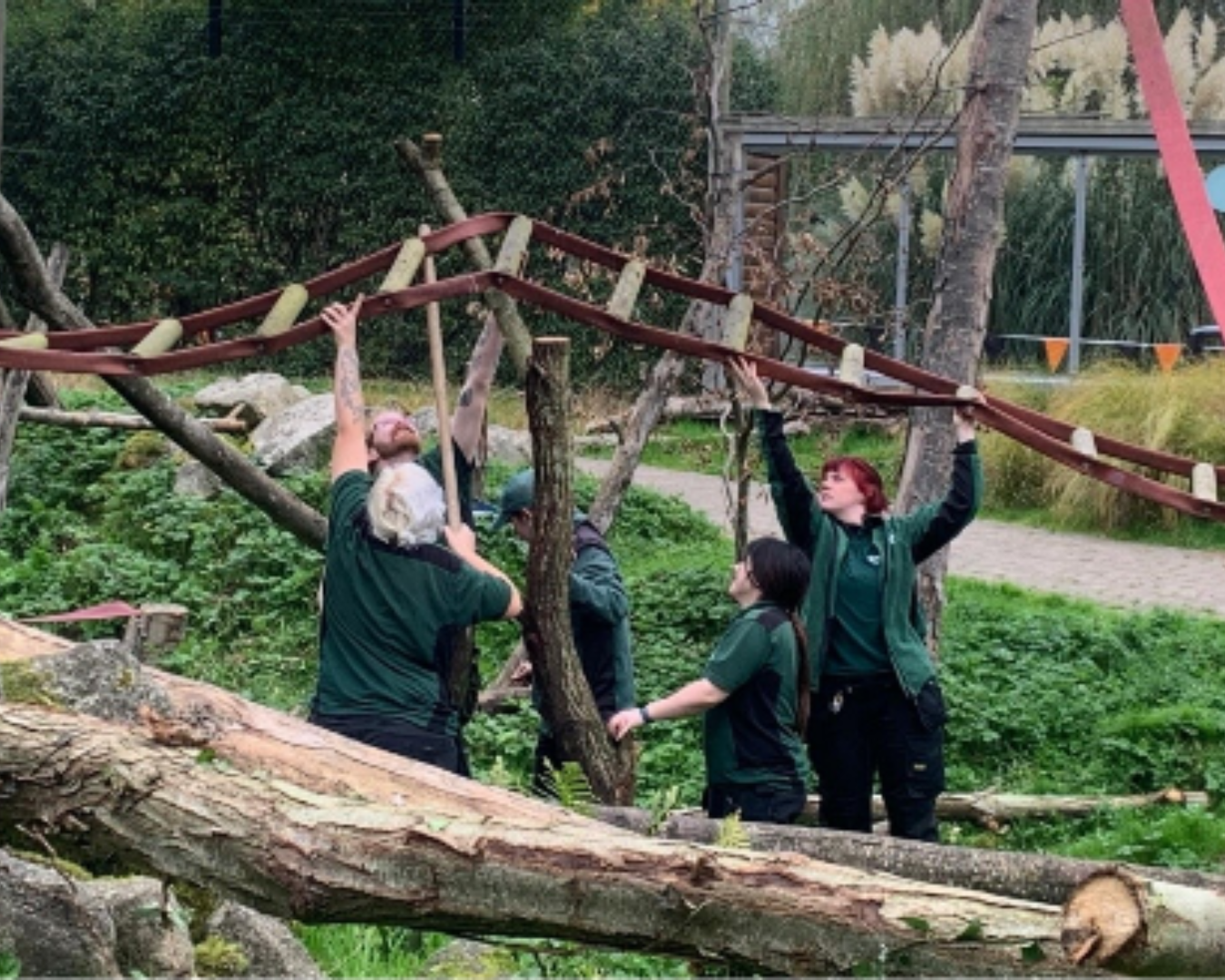
| Photo – some of our Zookeeping team working together in our Lemur Woods – Monica (Deputy Zoo Manager) |
Meet Senior Zookeeper, Anthony
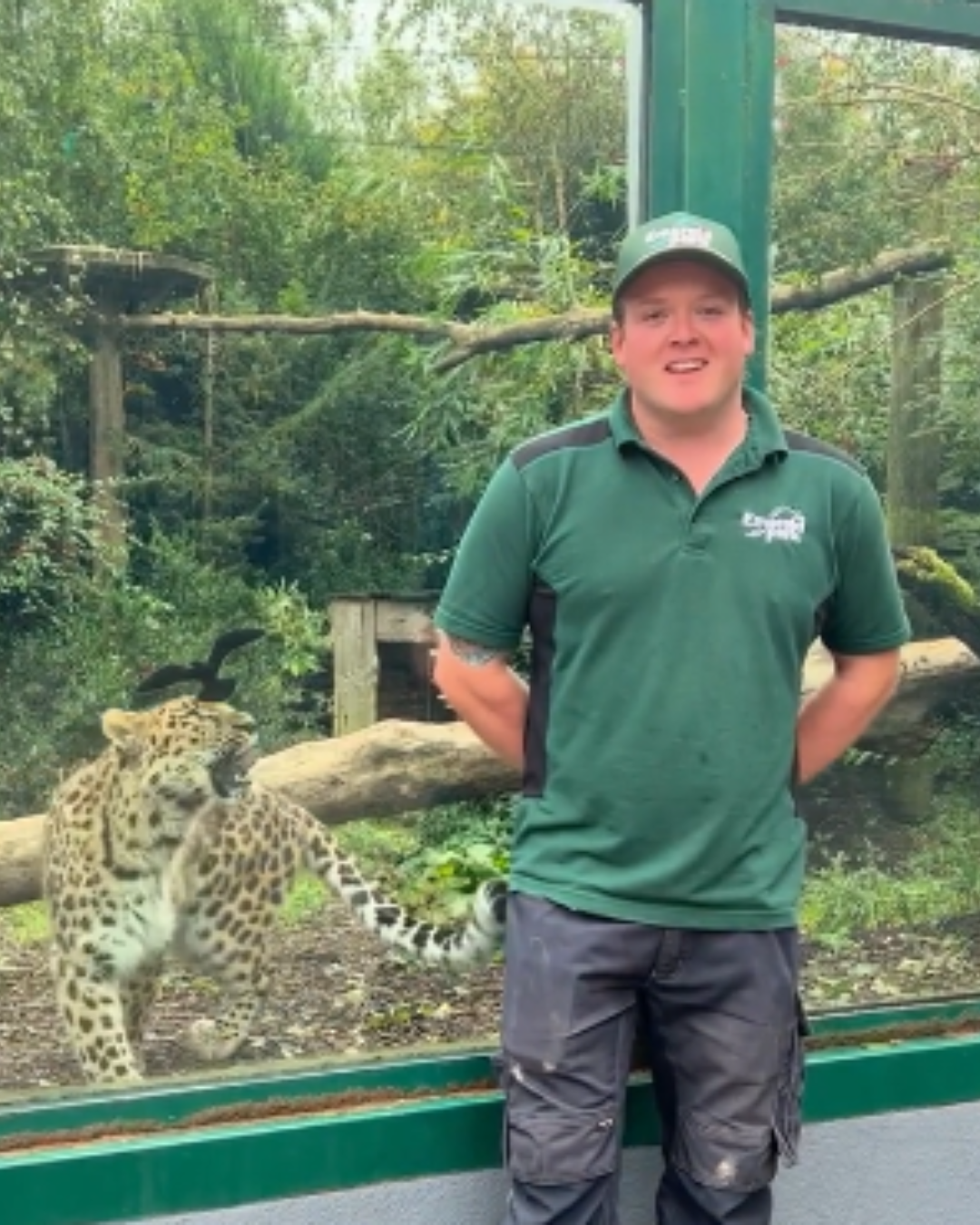
We asked our Senior Zookeeper Anto about working as a Zookeeper; “I just felt that the natural world is so fascinating that when I wanted to work with these species, I got to see firsthand how they adapt to new environments. It is just something I knew I always wanted to be a part of.”
We thank our Zookeepers here in Emerald Park for their dedication and appreciate Zookeepers all around the World this October!
| Photo – Anthony, one of our Senior Zookeepers with Freya, our female Amur Leopard (Panthera pardus orientalis) |
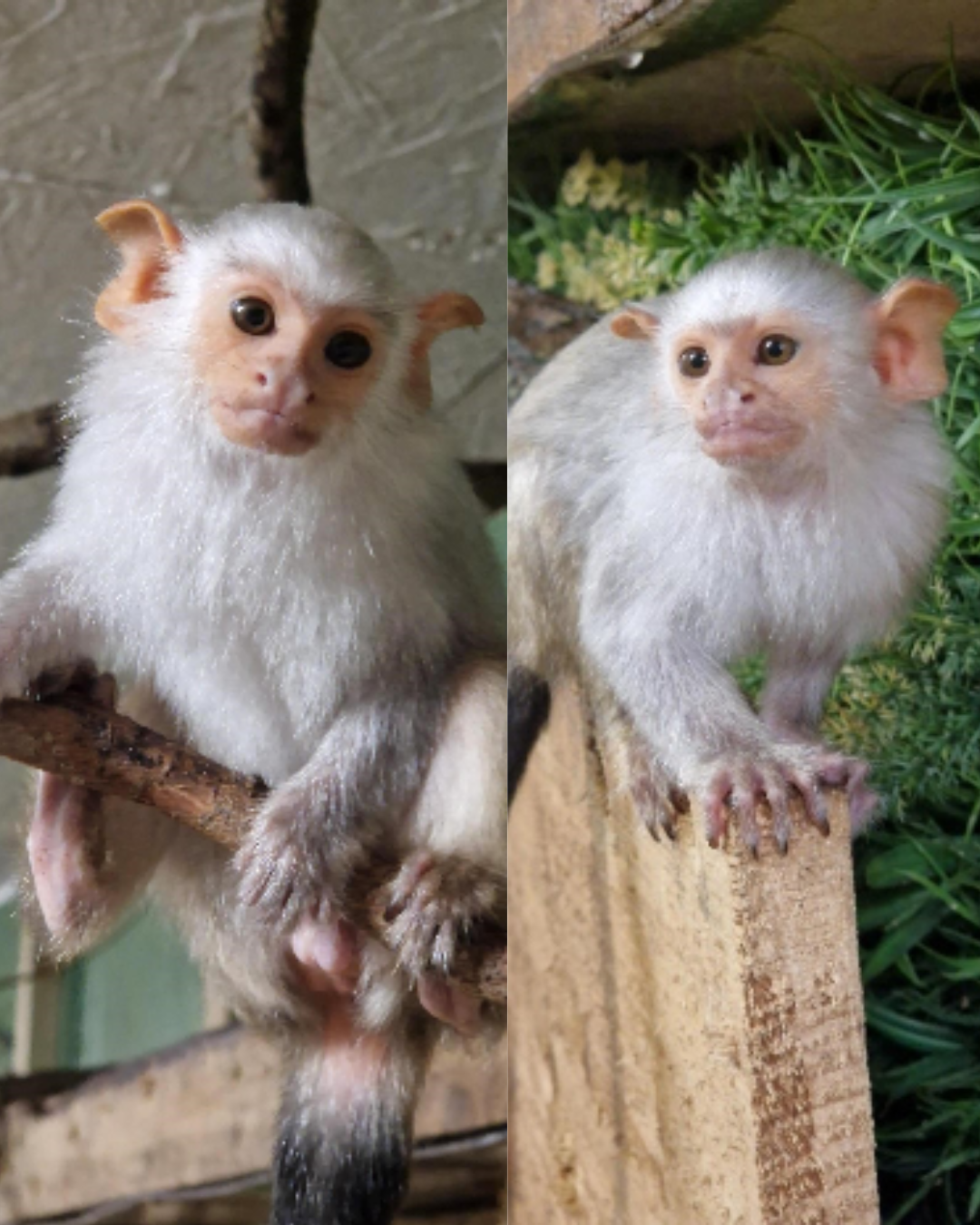
Our Newest Silvery Marmoset (Mico argentatus) arrivals, born in June this year, have officially been named!
If you have been visiting our Zoo over the last few months you may have noticed some new faces in our Silvery Marmoset (Mico argentatus) habitat. On the 2nd of June 2026 Father Geralt and Mother Honey gave birth to two new babies. Now 4 months later, they have been sexed. We are pleased to announce a very healthy boy and girl. We then got the fun of naming these adorable additions. We are pleased to introduce you to Molly and Rossa.
The Silvery marmoset (Mico argentatus) is a diurnal, highly social and arboreal primate that inhabits the humid and transitional forests eastern Amazon, especially in the regions of the Pará and Tocantins. They are mostly found in Terra Firme forests and secondary forests. Silvery Marmosets are an arboreal species meaning they spend most if not all their lives in trees. Their diet is omnivorous, heavily reliant on fruit, insects, small vertebrates and flowers with the most important aspect of their diet being tree exudates (sap, gum, and resin). Silvery Marmosets have specialized incisors that allow them to penetrate tree bark and encourage the release of sap, repeatedly returning to the same location to feed. Because it promotes the movement of nutrients and the management of insects connected to the host plants, this activity has a significant ecological importance.
Compared to many other primate species, some research indicates that they are more interested in and willing to investigate unfamiliar tasks or settings. This is something we have noticed with Molly and Rossa here in Emerald Park. During the recent rainy days, they have been incredibly curious of umbrellas and will regularly observe from their windows. Their four siblings have been nurturing this curiosity while participating themselves. They have also been helping their parents care for the new arrivals by carrying them on their backs giving their mother and father a break! This shows the species intelligence and strong social bonds.
Next time you’re in the Zoo, pop by and meet these adorable new arrivals yourself!
| Photos by Emma (Zookeeper) – Left – Rossa our male silvery marmoset baby | Right – Molly our female silvery marmoset baby. |
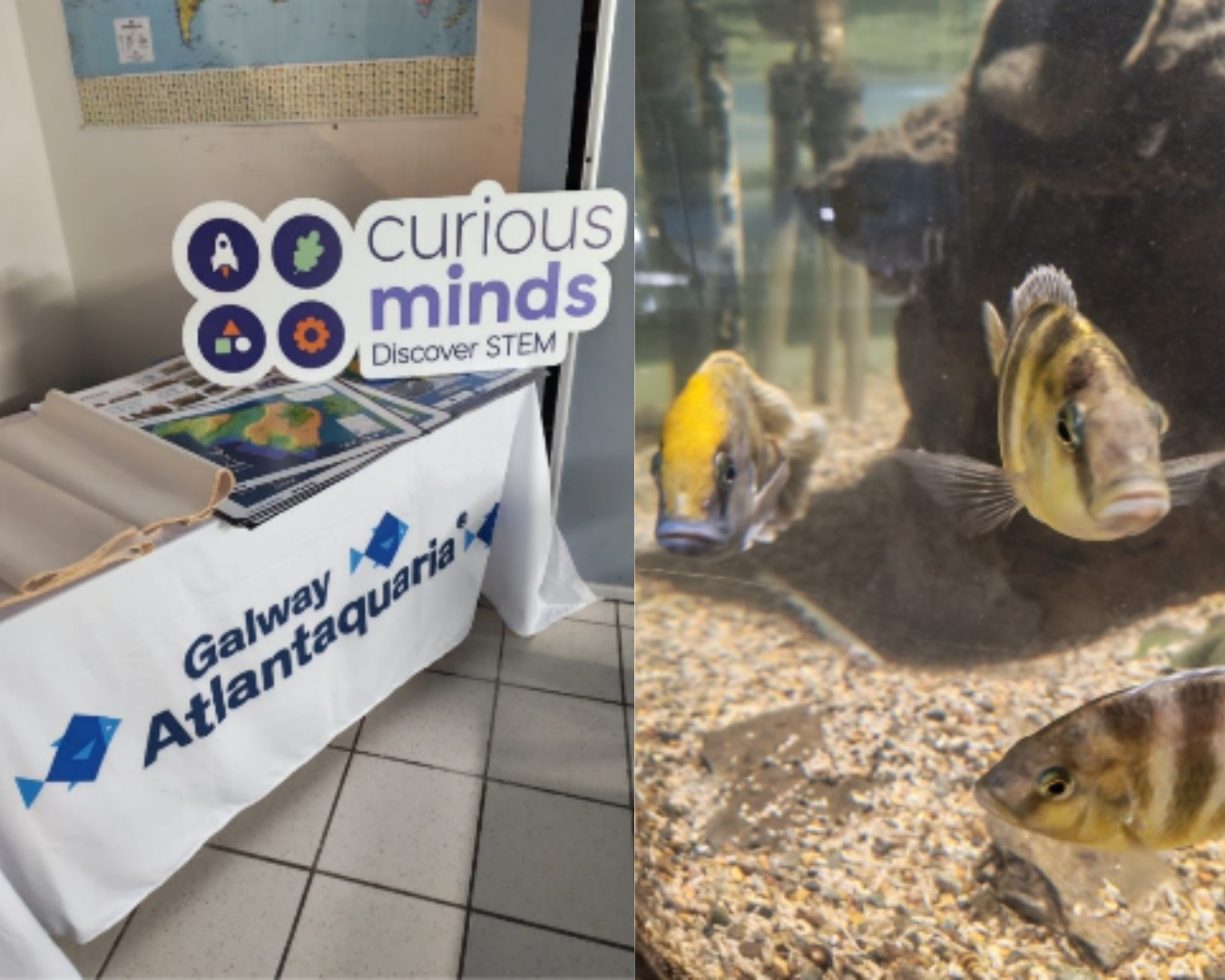
On the 22nd of October, Niamh our Discovery and Learning Manager attended a Curious Minds Discover Centres Meeting hosted by Galway Atlantiquaria
On Thursday October 22nd, our Discovery and Learning Duty Manager Niamh attended a Curious Minds Discover Centres Meeting hosted by Galway Atlantiquaria. Curious Minds, as part of Research Ireland’s Education and Public Engagement activities, supports schools to develop the innate curiosity of children through a hands-on, inquiry-based approach to STEM learning. The programme originated as Discover Primary Science and Maths (DPSM) in 2003 with the goal of introducing primary school students to science in a practical, hands-on, enjoyable and interactive way.
Research Ireland’s network of Discover Centres offer captivating informal STEM learning experiences, accredited workshops and outreach programmes for primary schools. Discover Centres support schools to engage learners in science education outside of the classroom in a hands-on and practical way. It also gives students a chance to meet scientists and educators across Ireland from a variety of backgrounds and professions. Centres include Emerald Park, Dublin Zoo, National Parks and Activity Centres across Ireland.
During this meeting, Discover Centres from around the country met up to discuss obstacles and successes within the programme. Insight was gained into the shared experience of science-based educators. Speaking with peers in this field provided an opportunity to collaborate on ideas and coordinate goals in Stem education across the country. We heard a presentation from Castlecomber Discovery Park about their education packages and their projects for the future. This part particularly aligned with our goals as we are a newly accredited Discovery Centre with Curious Minds.
Emerald Park became accredited with Curious Minds this year with our two new packages for primary school children. One of these packages is our Diet and Nutrition package. Guided by our Discovery and Learning team, pupils will discover what different animals eat, why diets vary between species, and how nutrition supports animal health and survival. Our other accredited package is our Habitat Explorers package. Pupils will explore real animal habitats, learning how animals live, adapt, and survive in the wild.
If you are interested in booking one of these packages, check out our website or email education@emeraldpark.ie today!
| Photo 1 (left) – The stand at the meeting, highlighting the Curious Minds logo for Research Ireland – Niamh (D&L Duty Manager) | Photo 2 (right) – one of the exhibits in Galway Atlantiquaria showcasing their beautiful cichlids including the Giraffe Cichlid (Nimbochromis venustus) – Niamh (D&L Duty Manager) |
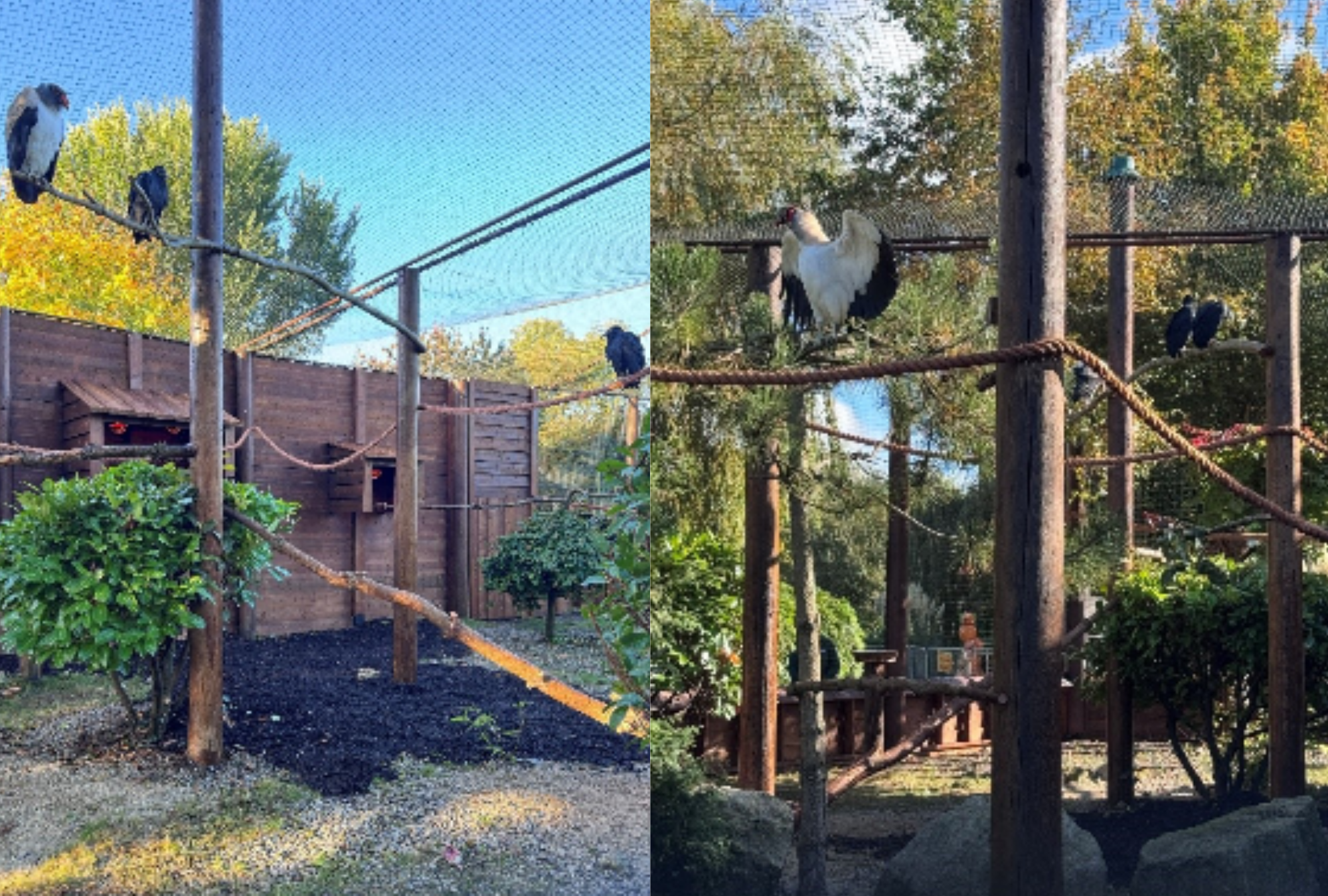
Our American Black Vultures (Coragyps atratus) and our King Vultures (Sarcoramphus papa) have moved into their new habitat
Our Eagle-eyed guests, or should we say vulture eyed guests, may have noticed a project we have been working on for the last few weeks. Our Zoo Maintenance team of Brian and Rob have been busy at work building 2 new habitats for some of our birds. On one side, we have introduced a mixed species aviary, and our King Vultures and American Black Vultures have been loving their new home.
The Black Vulture (Coragyps atratus) also known as the American Black Vulture, is a member of the New World vulture family, whose range extends from the southeastern United States to Central Chile and Uruguay in South America. The King Vulture (Sarcoramphus papa) is also a New World vulture, which lives predominantly in tropical lowland forests stretching from southern Mexico to northern Argentina. These two species would naturally interact with each other in their overlapping habitats in Central and South America.
As the King Vulture is much larger, they would be first to feed on a carcass. Only when finished, would the American Black Vultures be allowed to feed. In their native homes, they display a chasing behaviour to ensure this hierarchy is kept. Since these two species have been introduced here in Emerald Park, their native instincts are kicking in and both Thea and Thor, our King Vultures have regularly been spotted chasing American Black Vultures Jekyll and Hyde away from food. Don’t worry, our Black Vultures have been watched by our Zookeeping team to ensure that despite this natural behaviour, they are still eating enough.
You may have spotted our Black Vultures Jekyll and Hyde during our World of Raptors displays over the summer. We don’t fly our birds all year round. Like all of us, our birds deserve a well-earned break. Our birds participate in training and participate in our World of Raptors Displays for only roughly half the year. The rest of the year they spend their days relaxing and enjoying the autumn and Winter off. This ensures our birds are always happy to participate in displays as we want it to be an enjoyable stress-free experience for them, which also includes time away from the excitement. However, some of our birds are only starting their training to prepare for early spring displays when our World of Raptors returns in March.
| Photo 1 (left) – Both species of vultures perched together in their new home– David (Zookeeper) | Photo 2 (right) – One of our King Vultures (Sarcoramphus papa) sunning themselves with an American Black Vulture (Coragyps atratus) behind – David (Zookeeper) |
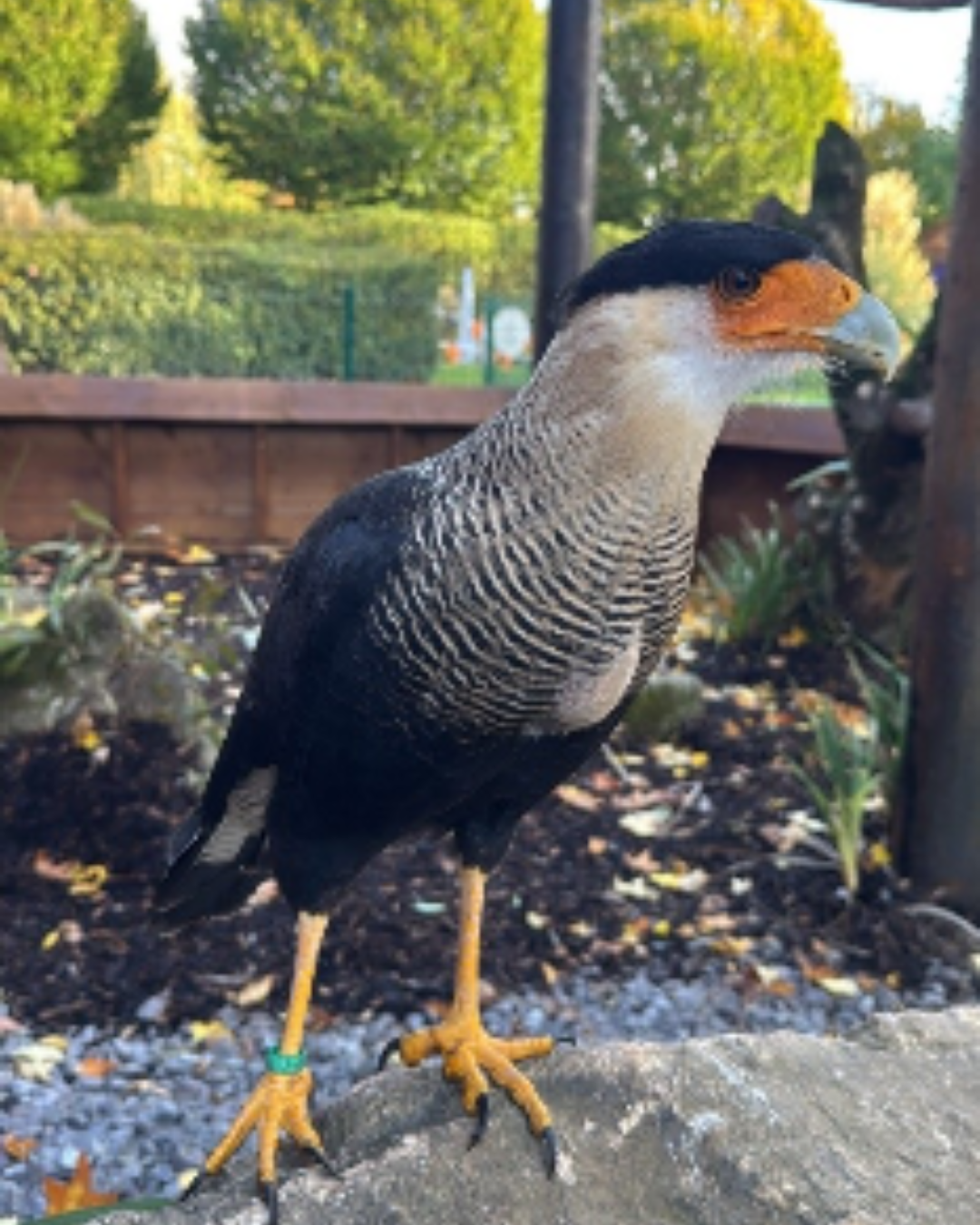
Pablo and Carlos, our Crested Caracaras (Caracara plancus) are enjoying their new home
Our King and Black Vultures and are not the only species with a brand-new home. Our Crested Caracara (Caracara plancus) pair Pablo and Carlos have moved also into their new home and are enjoying their new neighbours. Our Zoo Maintenance team of Brian and Rob have completed the build of two new aviaries for our birds. Our Crested Caracaras have moved in directly beside our 2nd mixed vulture aviary of our King Vultures and American Black Vultures.
Crested caracaras are found from the southern United States, particularly Texas, Arizona, and Florida, through Mexico, Central America, and much of South America, extending as far south as Tierra del Fuego in Chile. Although these birds look like hawks, scavenge food like vultures and walk predominantly foraging on the ground instead of flying, they are actually part of the falcon family! Crested caracaras are opportunistic omnivores, feeding heavily on carrion but also actively hunting small mammals, reptiles, amphibians, insects, and the eggs and nestlings of other birds. These birds in their native home can commonly be found battling Turkey Vultures and American black Vultures for the best spots at a carcass.
Crested Caracaras are incredibly intelligent and can live in loosely social structures. Many other falcons tend to hunt alone outside of their breeding pairs, but Crested Caracaras can be seen foraging with young family members who stay in their parent’s territory for the first year or so and can join in on feeding on larger carcasses. The name caracara is itself onomatopoeic, borrowed from Indigenous South American languages to mimic the bird’s distinctive rattling call, a harsh, cackling series of notes often delivered with the head thrown back over the shoulders in a display posture unlike almost any other North American raptor. This throw-back call display is frequently used both to communicate between mates and to assert dominance at a carcass over competing scavengers.
Come and meet our dynamic duo Pablo and Carlos next time you visit the Zoo!
| Photo – Pablo, our female Crested Caracara (Caracara plancus) – David (Zookeeper) |
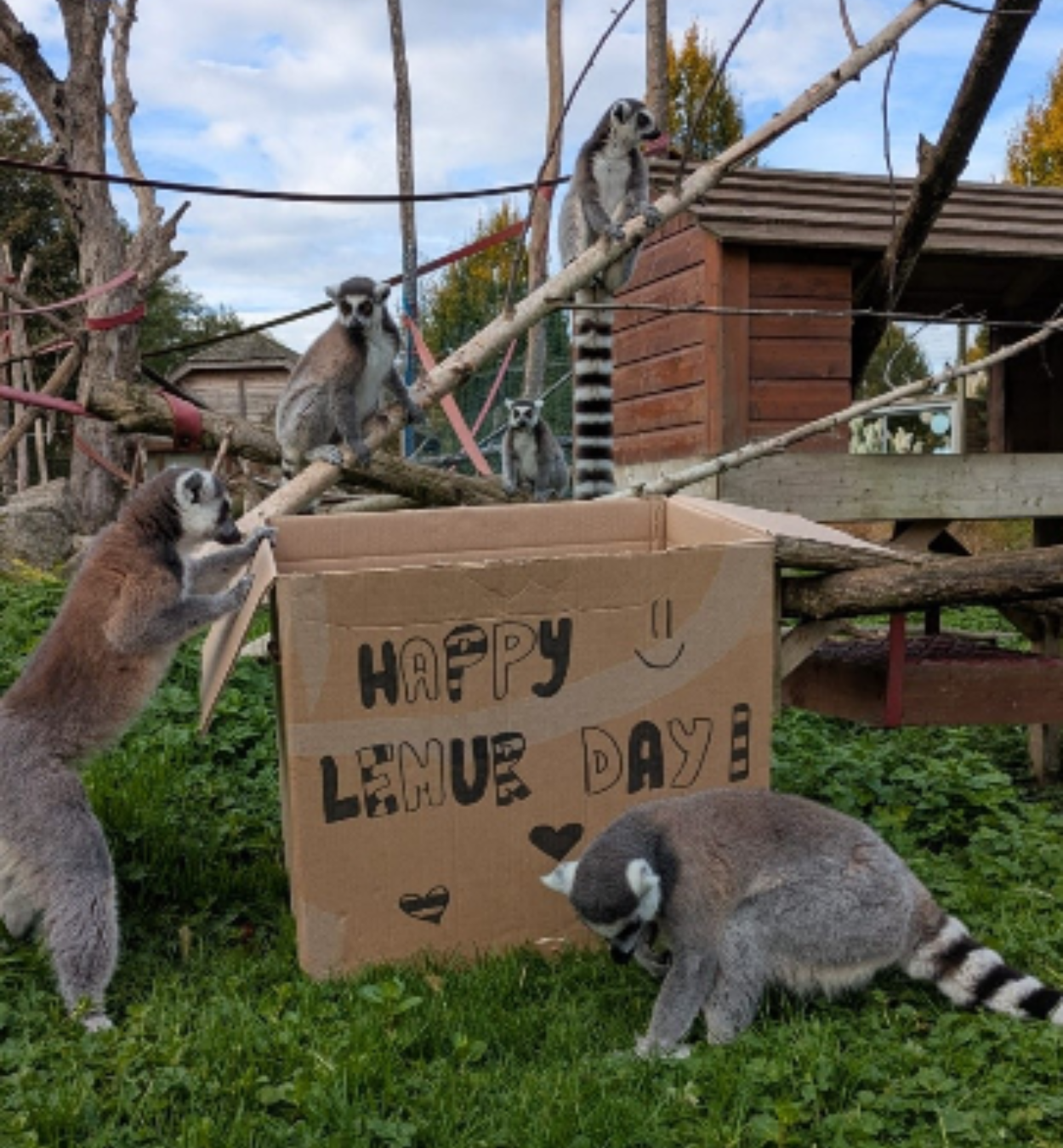
On the 30th of October we celebrated World Lemur Day as Emerald Park is home to 14 Endangered Ring–Tailed Lemurs (Lemur catta)
The first World Lemur Festival was celebrated in 2014 in Madagascar’s capital city of Antananarivo. It was organized by Professor Jonah Ratsimbazafy of GERP (Groupe d’etude et des rechercher sur les primates) Madagascar. GERP connects scientists in Madagascar with the international community to help build in-country capacity for lemur conservation. It raised awareness about the value of lemurs as Madagascar’s unique natural heritage among scientists and the public in Madagascar. It aimed to awaken pride for lemurs in Malagasy people, improve the economy through tourism, and promote lemur conservation and education worldwide
Lemurs are the most endangered group of mammals in the world. In fact, 98% of lemur species are at risk of extinction and 31% are critically endangered. Ring-tailed lemurs were once considered one of the more widespread lemur species, found across a range of habitats in southern and southwestern Madagascar, from dry spiny forests to gallery forests along rivers. Although Ring Tailed Lemurs have natural predators like hawks and fossae, human activity is causing the greatest harm to the species. Ring-tailed lemurs are endangered primarily because their forest habitat in Madagascar is being destroyed faster than it can recover. One survey across 32 known sites estimated that the species may have declined by more than 95% since the year 2000, with roughly 2,220 individuals remaining at those locations and local extinctions confirmed at a dozen of them.
Another threat to these incredible species is the illegal pet trade. One estimate based on both in-person and online data collection suggested that live capture may have affected more than 28,000 lemurs across species between 2010 and 2013, with ring-tailed lemurs among the most seen in captivity. Lemurs are social and in the illegal pet trade are often kept confined in small areas alone. This leads to a very short life expectancy of only a few months to a few years. Lemurs have a regular life span in the wild of 15-20 years and can live 20-25 years under the care of humans.
In Emerald Park, our conspiracy (group name of lemurs) is part of incredible conservation efforts like the European Association of Zoos and Aquaria (EAZA) Ex situ Programmes (EEPs). EEPs are population management programmes for over 500 animal species, coordinated by experts from EAZA Membership. Each EEP has a coordinator who is assisted by a species committee. The coordinator collects information on the status of all the animals kept in EAZA zoos, produces a studbook, carries out demographic and genetic analyses and finally, produces a plan managing that species population. In simpler terms, they create a ‘safety net’ of that species with a genetically healthy population in the care of humans. This allows the species to be reintroduced into their native home in Madagascar, should their population drop more.
Celebrate World Lemur Day by visiting us here to witness these incredible animals in person!
| Photo – Our Ring-tailed Lemur (Lemur catta) enjoying their World Lemur Day themed feed. The box was filled with their favourite vegetables like sweetcorn! – Andra (Zookeeper) |
Check back next month to see what the Zoo Team got up to in November!
Thanks for reading!