

Popular Searches

Zoo news – May 2026
May, 2026
From new educational experiences to annual species celebrations, the zoo had a busy month in May!
Education Celebration – Discovery & Learning welcomed back our secondary schools to teach an array of packages such as Grassland Ecology and Business.
Our Discovery and Learning were busy this month with the return of our educational packages. We welcomed schools from all over Ireland to the park to teach students an array of topics. Our two most popular packages were our Grassland Ecology and the Business Package.
During our Ecology package, students learn about animal and plant adaptations, critical thinking skills and the importance of biodiversity in the classroom before taking their knowledge to a grassland habitat to observe the native flora and fauna right here in the park. Our business packages focus on the history of the park, corporate responsibly and how a business becomes successful in a classroom setting before seeing it in action in a business tour around key areas of the park.
If you are a teacher and looking to book one of these packages, please see our list of educational packages available on our website.
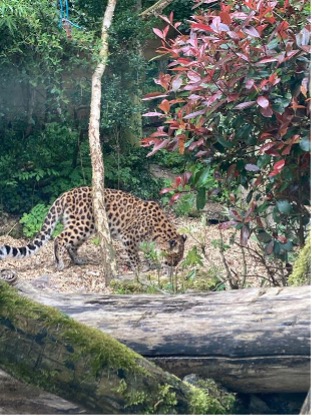
On the 3rd of May, we celebrated our two Leopards, Manchurian and Freya for International Leopards Day.
On the 3rd of May we celebrated International Leopards Day in the park. One of our charity partners here in Emerald Park is the Wildcats Conservation Alliance. They are an initiative founded by the Zoological Society of London (ZSL) and Dreamworld Wildlife Foundation (DWF) channelling public and zoo support for the protection of many species including the Amur Leopard. Amur Leopards (Panthera pardus orientalis) are the most endangered species of big cat with as few as only 120 remaining in the wild.
We celebrated this incredible species with leopard themed games such as spot the leopard, showcasing the incredible camouflage ability of these cats. At 13:00, we had a talk at our leopard’s enclosures where wediscussed topics such as diet, habitat and conservation for these incredibly endangered felines.
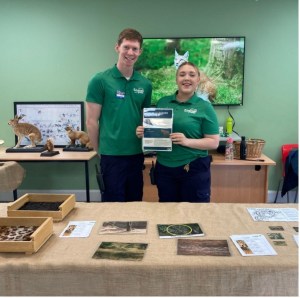
Photo of our Leopard Day Activities in Biofacts with D&L staff Nicole and James – Charlotte (Discovery and Learning)
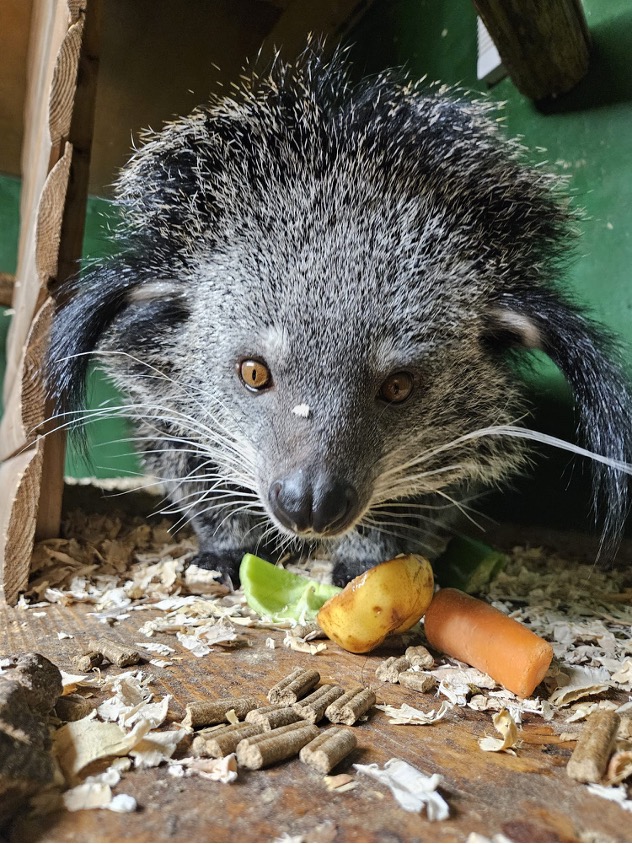
Another Celebration – On the 9th of May we celebrated Dora and Kumo, our Binturongs for International Binturong Day.
Our Leopards were not the only species shining in the spotlight in May, as International Binturong Day was celebrated on the 9th. Binturongs, (Arctictis binturong) sometimes known as bearcats, are a member of the viverrid family native to Southeast Asia. This incredible species is arboreal, meaning most of their life is spent in trees. They even have a prehensile tail to hold onto branches while they climb or sleep.
We celebrated this unique species with binturong themed games such as mazes and wordsearches. We also had an activity table educating guests on this species and its conservation as they are vulnerable to extinction due to issues such as deforestation for palm oil. We also carried three talks at 13:00, 14:00 and 15:00 to further spread awareness for these incredible species.
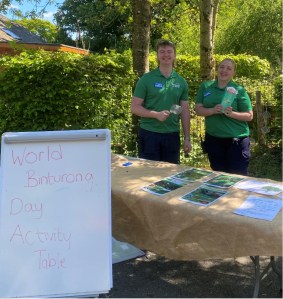
Photo of our Binturong Activity table with D&L staff Logan and Nicole– Michaela (Discovery and Learning)
Wishing them Well – Sophia and Lucia leave for their new home!
This month, we wished good luck to Sophie and Lucia on their journey to their new home. Our two female GuiananSquirrel Monkeys (Saimiri sciureus) made their way to Colchester Zoo in the UK. With recommendations for the Taxon advisory groups and EEP (EAZA EX-Sit Programme) breeding coordinators, animals are transported to and from Zoos around Europe. These moves can be attributed to a variety of reasons such as participation in breeding programmes, moving to a zoo with more space or to ensure individuals are getting their social needs met.
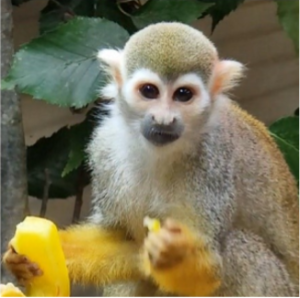
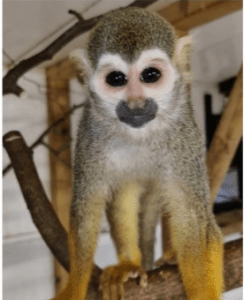
We wish Sophia and Lucia the best in their new home in Colchester Zoo!
A heartfelt goodbye to Ben
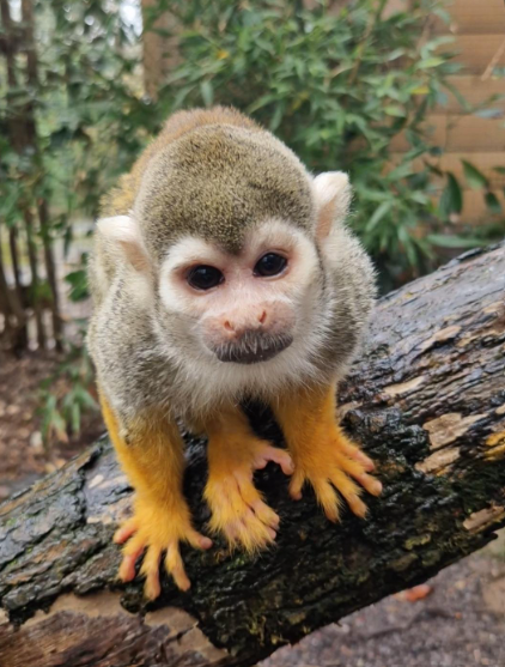
We are saddened to announce the passing of our oldest Squirrel Monkey. Ben. At the age of 19 years old, he has been a beloved part of the park since his arrival. He had not been well for a while, and the decision was made to put him to sleep where he can rest in peace. His memory lives on in the minds of those who loved and cared for him. One of our Head Keepers, Suzie wrote the following piece to commemorate Ben:
‘Ben was one of the few remaining original animals from when the park first opened way back in November 2010, Ben came to the park from Fota along with his father Bill. Ben was born in Fota on the 24th of October 2006. Bill and Ben were the first and only primates in the park until the Goeldi’s arrived in August 2015. Over his time here Ben shared his enclosure with some interesting friends, Ben lived quite happily alongside an iguana who Ben would groom and help Tito by removing any her dead, flaking skin, and even some Rabbits before he got some new Sq. Monkey Friends in 2014 Tom, Dick and Harry. Ben in his younger days was an incredibly cheeky chap he had no problem riffling through keepers’pockets to find some of his favourite treats inside – Waxworms, to this day they remained one of his favourite foods.’
In Loving Memory of Ben.
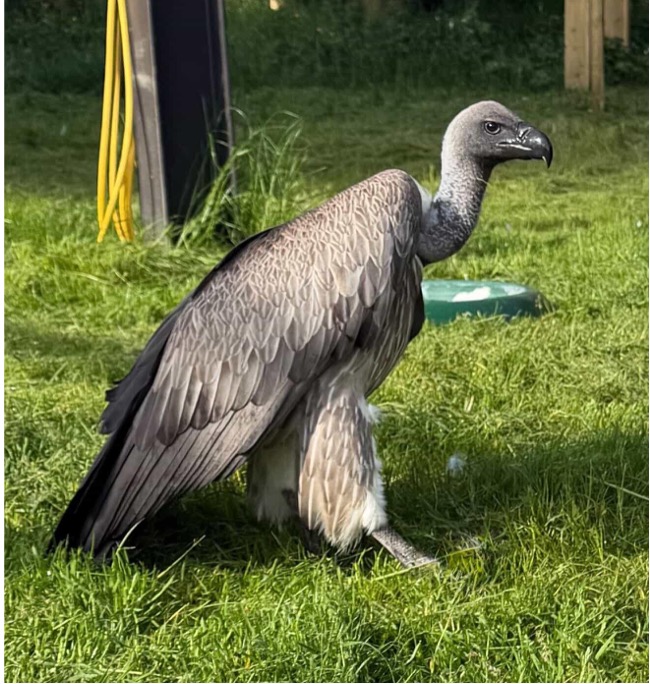
A New Feathered Friend – Our new White Backed Vulture Axel is settling in well
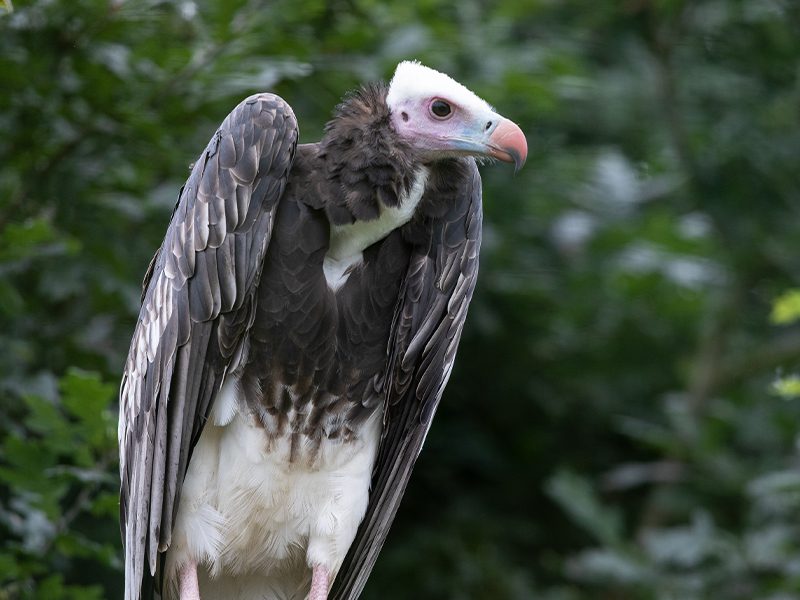
We are delighted to introduce you to our new White Backed Vulture (Gyps africanus) male, Axel. He arrived back in March from Chester Zoo and has successfully completed his quarantine. Axel is 15 years old and has already joined our mixed species aviary alongside our female white backed vulture Bane. They share the aviary with other African species such as white storks, white headed vultures and our Bateleur Eagle. Mixing species is incredibly beneficial as these species are from the same area in the wild and would be interacting with each other. These are also social species so providing social enrichment in the form of multiple species as well as their own is highly beneficial to our birds.
White backed vultures are endangered in the wild due to issues such as lead poisoning, ingesting poisoned livestock and poaching. This is because vultures eat almost exclusively carrion, so poisoned livestock travels up the food chain. Vultures play an incredibly important role in the wild, acting like natures clean up crew, consuming carcasses before disease can spread. This is why conservation of this species is so important.
Come by our mixed species aviary to visit Axel!
Native Species Week – Dublin Zoo
From Saturday 9th May to Monday 11th May, some of our Zoo team attended the Native Species Festival in Dublin Zoo alongside other organisations like Seal Rescue Ireland, Vincent Wildlife Trust and the Irish Peat Conservation Council. Both the Discovery and Learning and Zoo departments represented Emerald Park. We celebrated our native species in Ireland with games and our biofacts such as red kite feathers, barn owl skulls and native species taxidermy. These provided an opportunity to shed light on the animals and plants that call this island home and spread awareness about the issues they face.
It also provided an opportunity to spread awareness of the work Emerald Park does to protect our native wildlife such as our collaboration with the Golden Eagle Trust who have reintroduced native raptors back into Irish Skies, as well as our collaboration with the All – Ireland Pollinator Plan, monitoring the pollinator populations within the park.
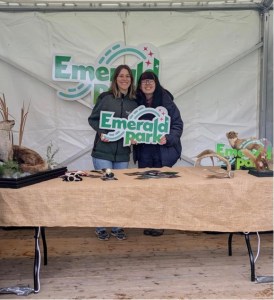
Photo of our stand at Dublin Zoo, with D&L Duty Manager Niamh and Zookeeper Andra – Joe (Discovery and Learning)
Thanks for reading. Check back next month for more zoo updates!
The Emerald Park Zoo Team