

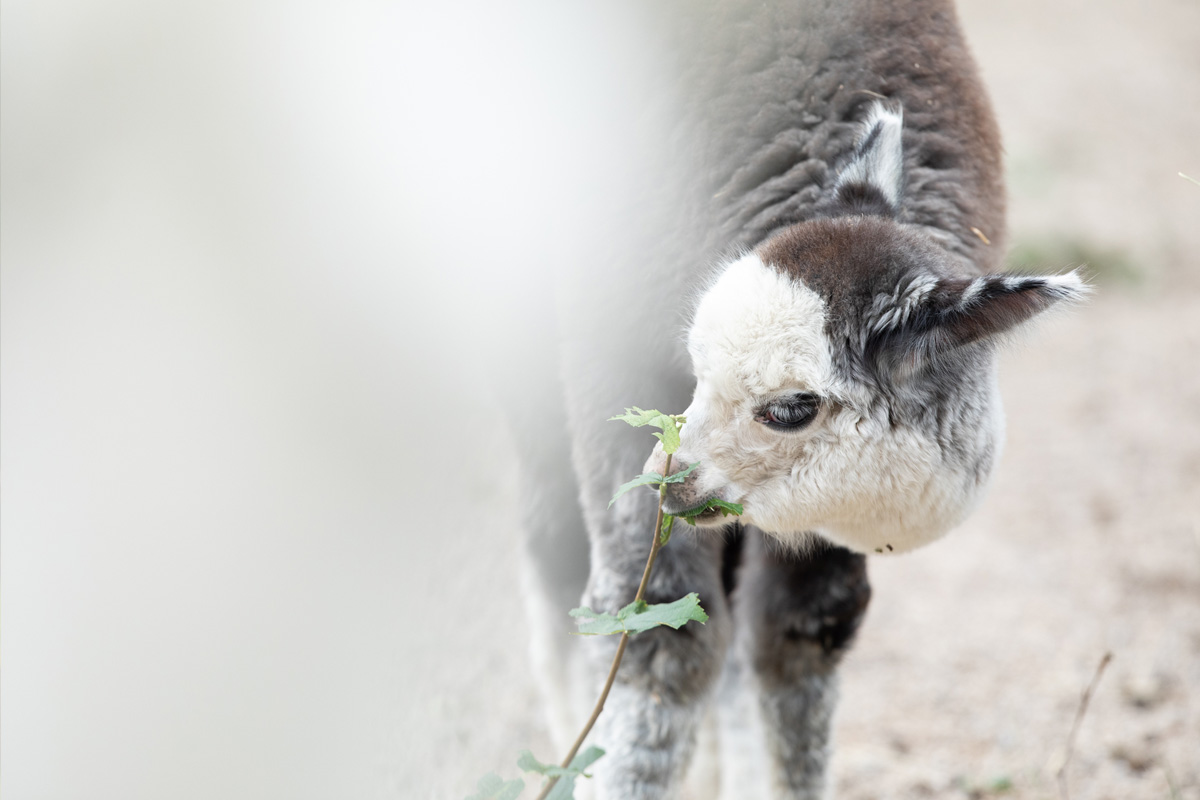
Alpacas originated in South America and today they are farmed all over the world. Their wild ancestor, the Vicuna, is found in semi-arid grasslands and plains.
They have slender bodies and a long, thin next, that they use to spot predators.
They are bred for their famous fleece, a special type of wool called “fibre”. Their fibre is one of the warmest and finest textiles in the world and it can be used to make luxurious clothing and blankets.

Popular Searches
Alpaca
Vicugna pacos
-
 Animal classMammal, equidae
 -
 HabitatThey are domesticated so have adapted to living in a wide range of habitats all over the world.
-
 DietHerbivores – eats grasses and hay. They are hindgut fermenters, like horses.
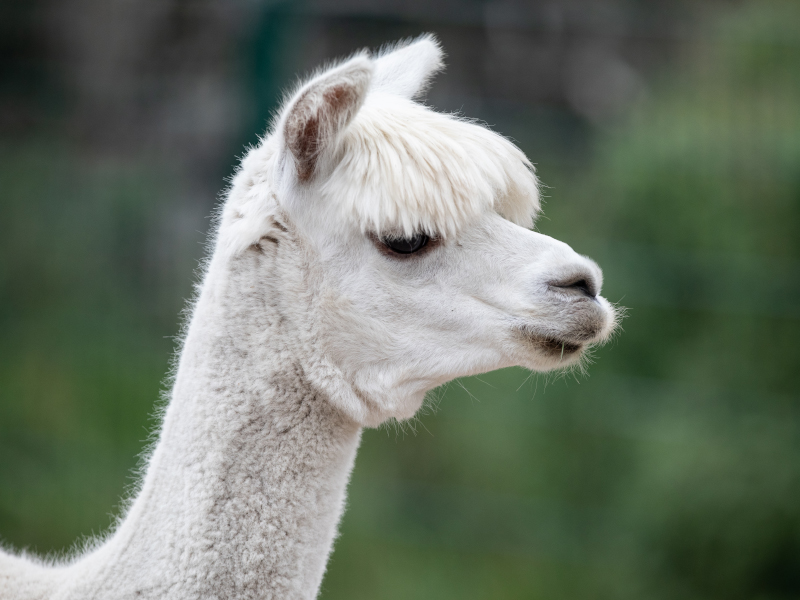
Alpaca is a domesticated member of the camel family.
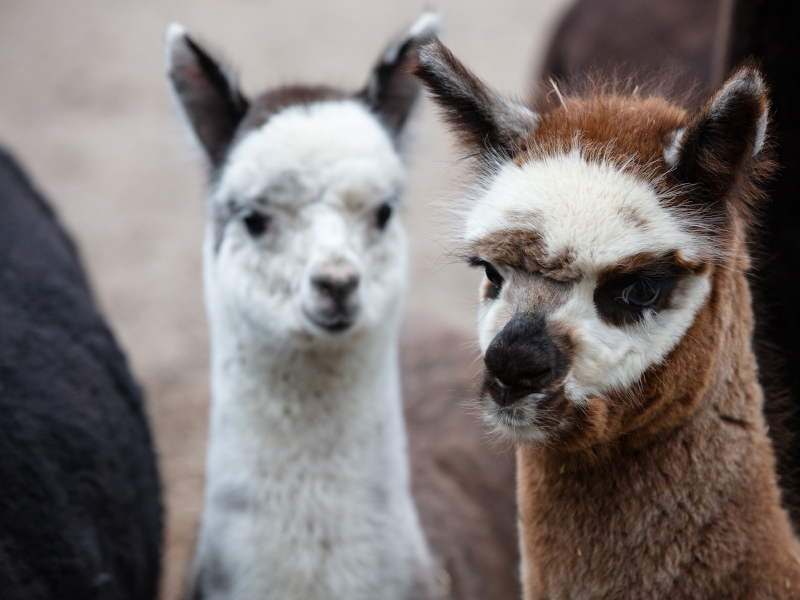
They have a three-chambered stomach to help them extract as many nutrients as possible from their grass diet. They will use a communal dung pile, away from where they graze, making them very hygienic animals.
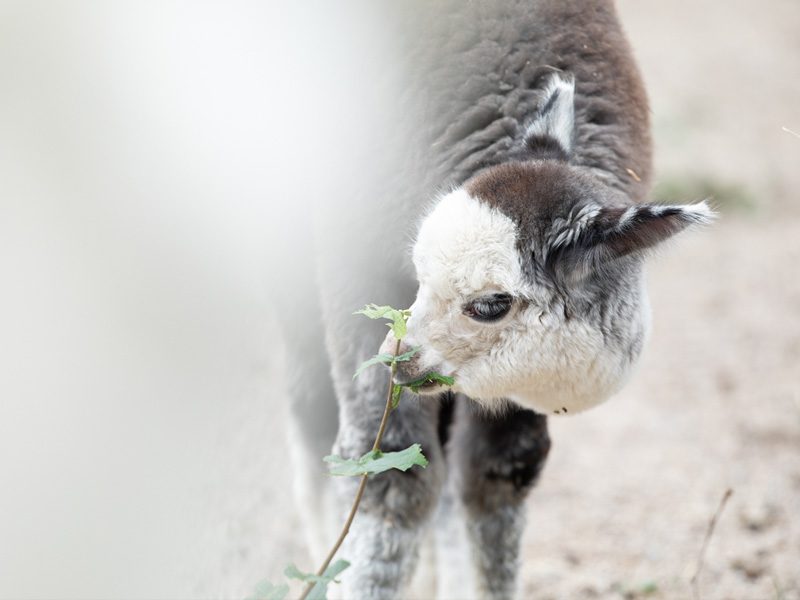
They are commonly used as guard animals, as they can detect predators a lot quicker than other farm animals. They alert others of danger and will attack smaller predators by kicking and spitting.
-
Introduction
-
Habitat
Alpacas originated in South America and today they are farmed all over the world.
Their wild ancestor, the Vicuna, is found in semi-arid grasslands and plains. -
Fun Facts
Pregnancy occurs from 11 to 13 months after which the female will usually give birth to 1 foal.