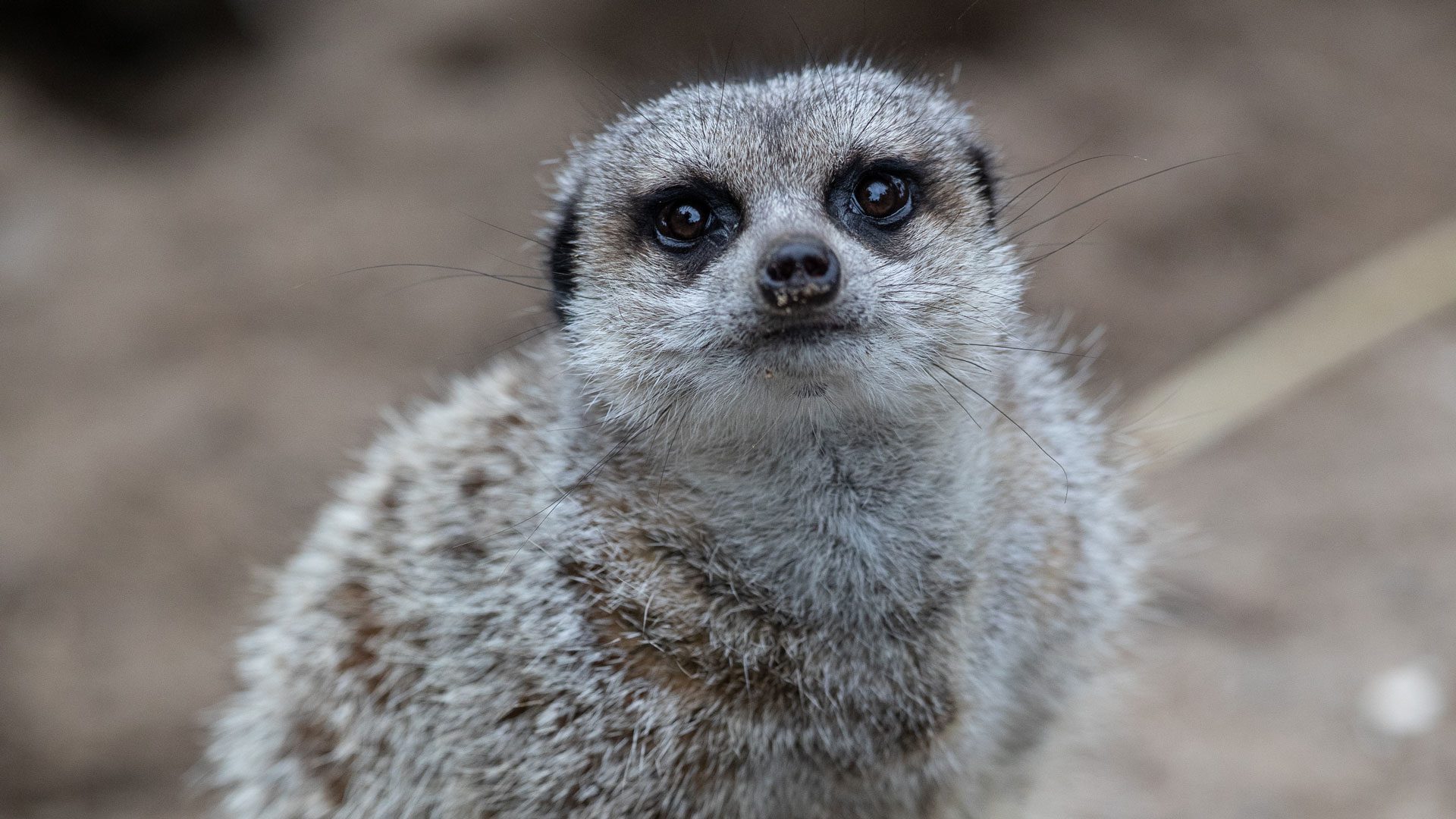


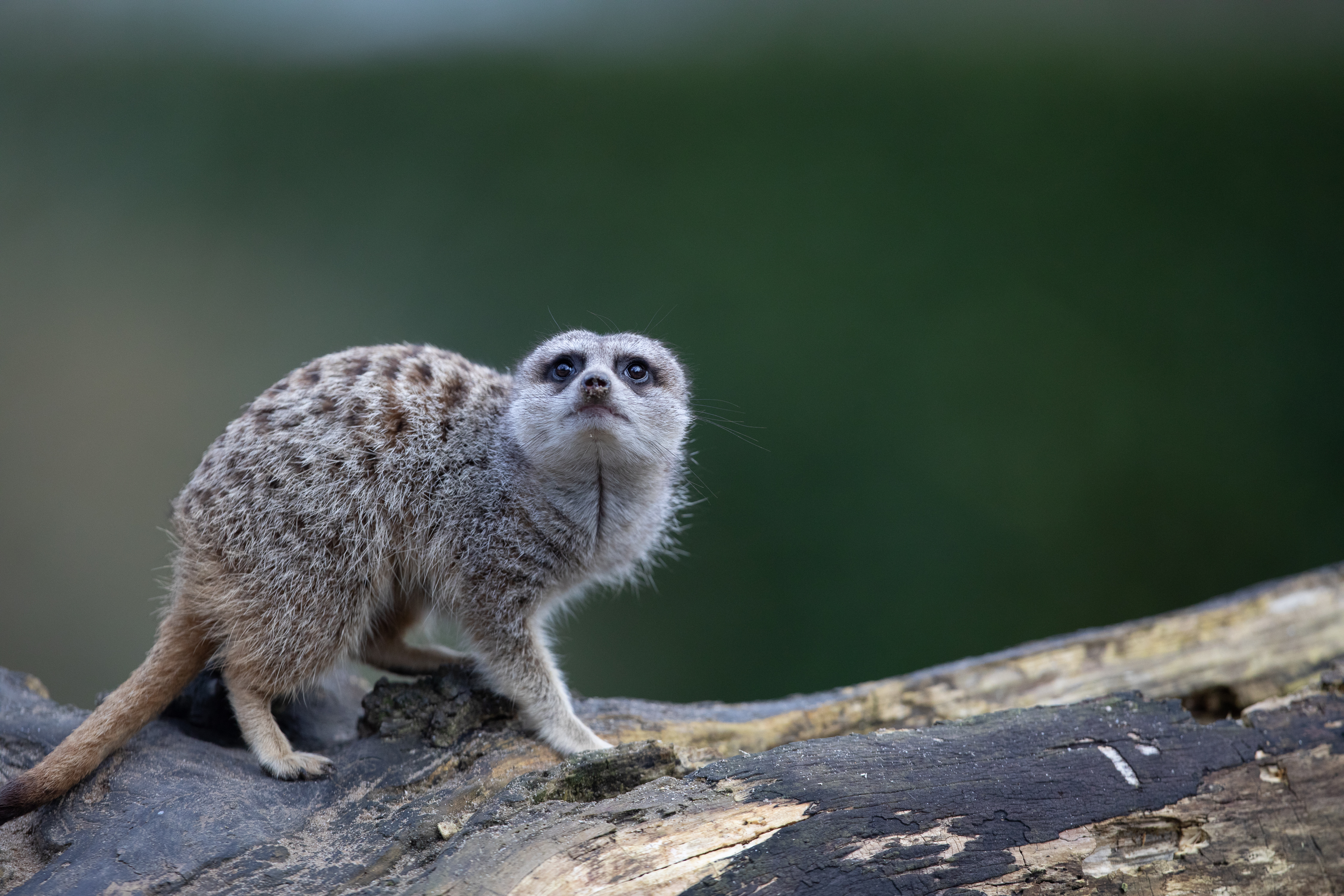
Meerkats are among the most social of all mammals living in groups composed of multiple families, that can contain up to 30 individuals. This behaviour helps them to thrive in harsh environments by working together as a group.
They are diurnal animals, being active during the day. In the wild, they will emerge after the sun has heated the surface of their burrow.
Meerkats are members of the mongoose family. They have long claws which they use to dig elaborate underground burrows and to hunt for food.
They communicate with one another through barks, calls, growls, and grunts.

Popular Searches
Meerkat
Suricata suricatta

-
 Animal classMammal, herpestidae
 -
 HabitatWarm, dry habitats such as deserts and dry grasslands.
 -
 DietOmnivores – diet consists mainly of insects, but will also eat plants, eggs, small rodents, and snakes.
 -
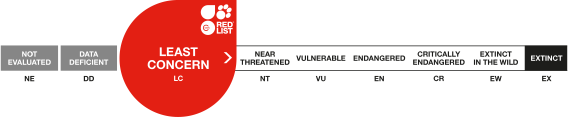
 Conservation statusLeast concern
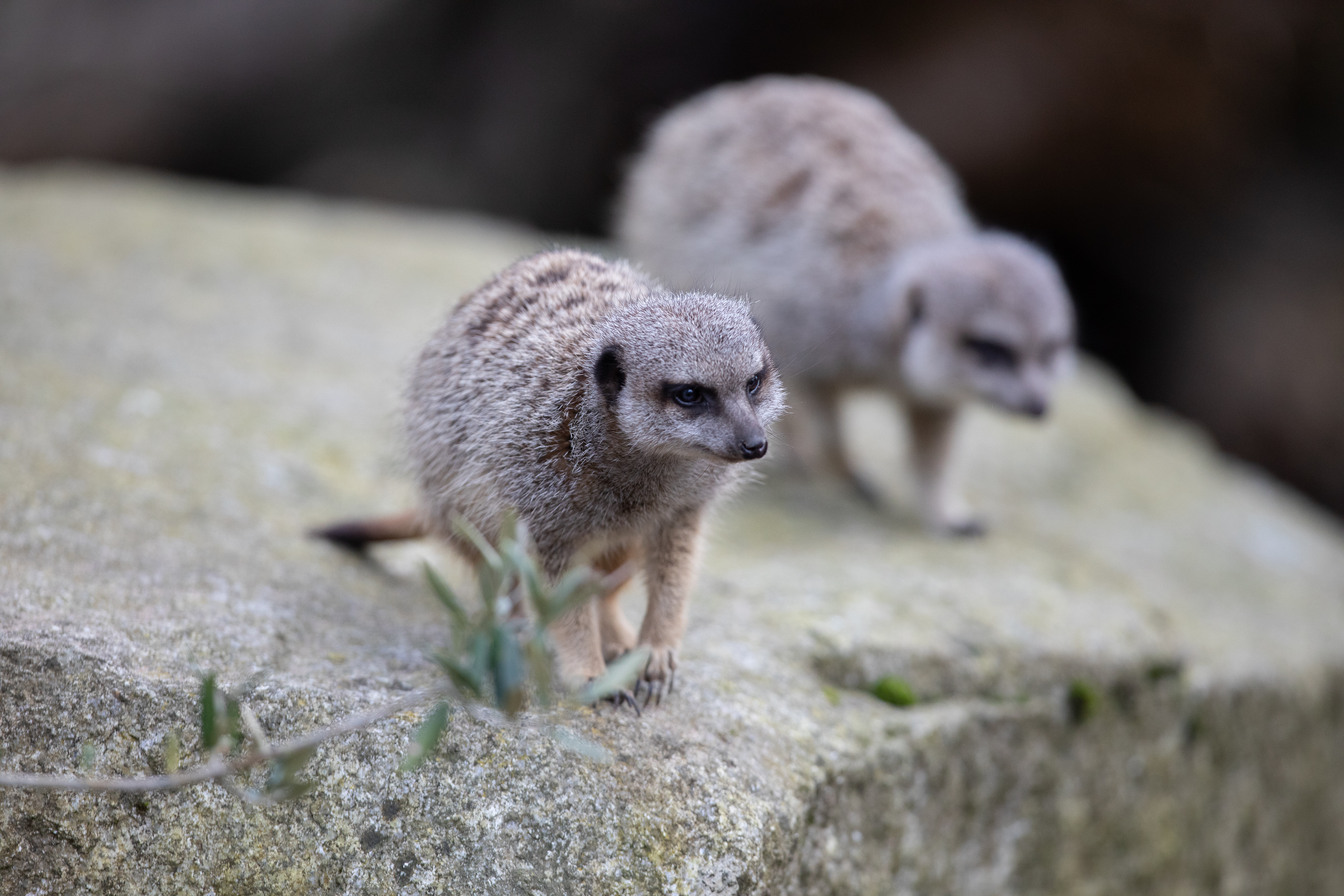
Meerkats live in large groups called mobs.
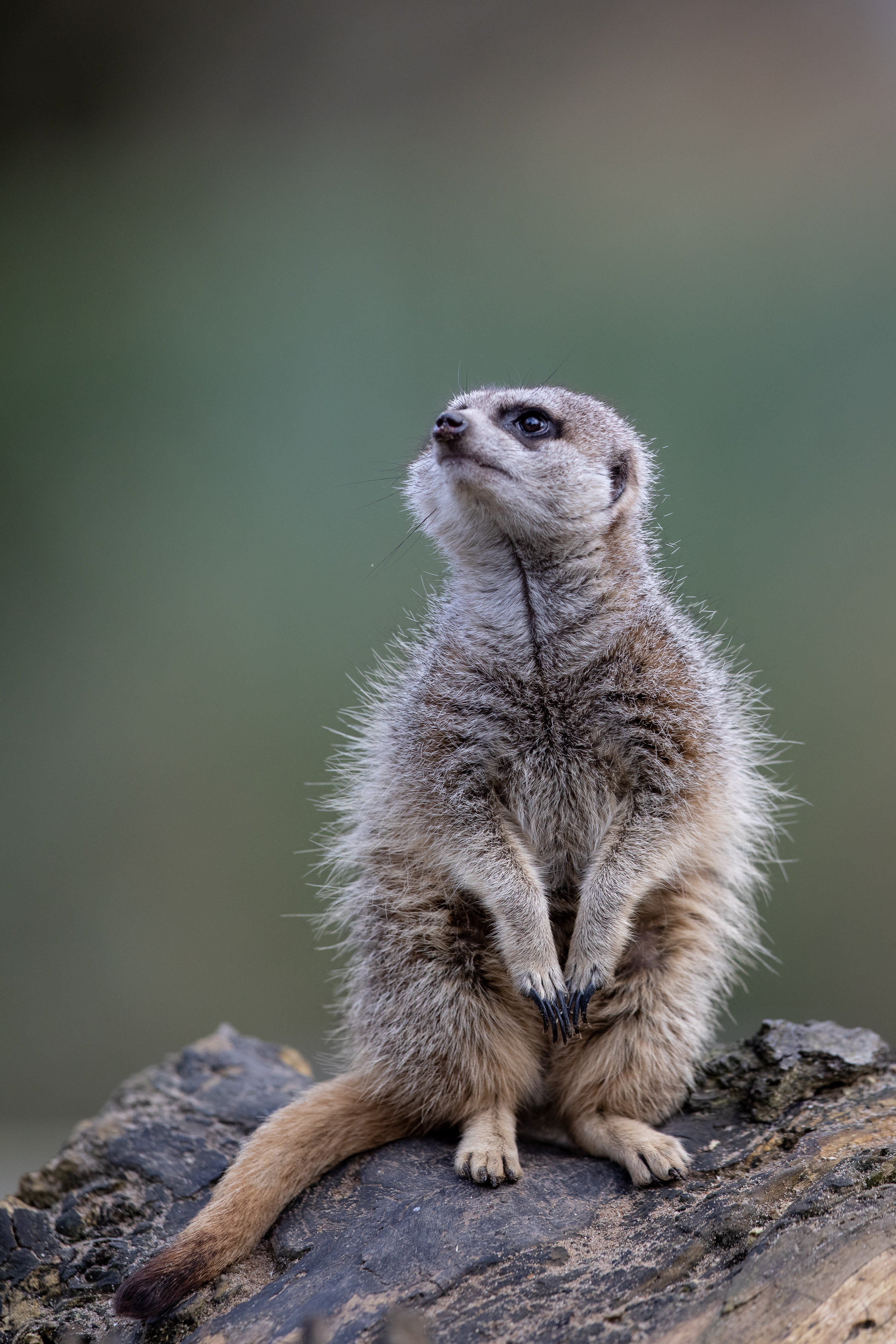
Meerkats carry out “sentinel” behaviour. This means they take turns looking out for predators, just like a security guard.
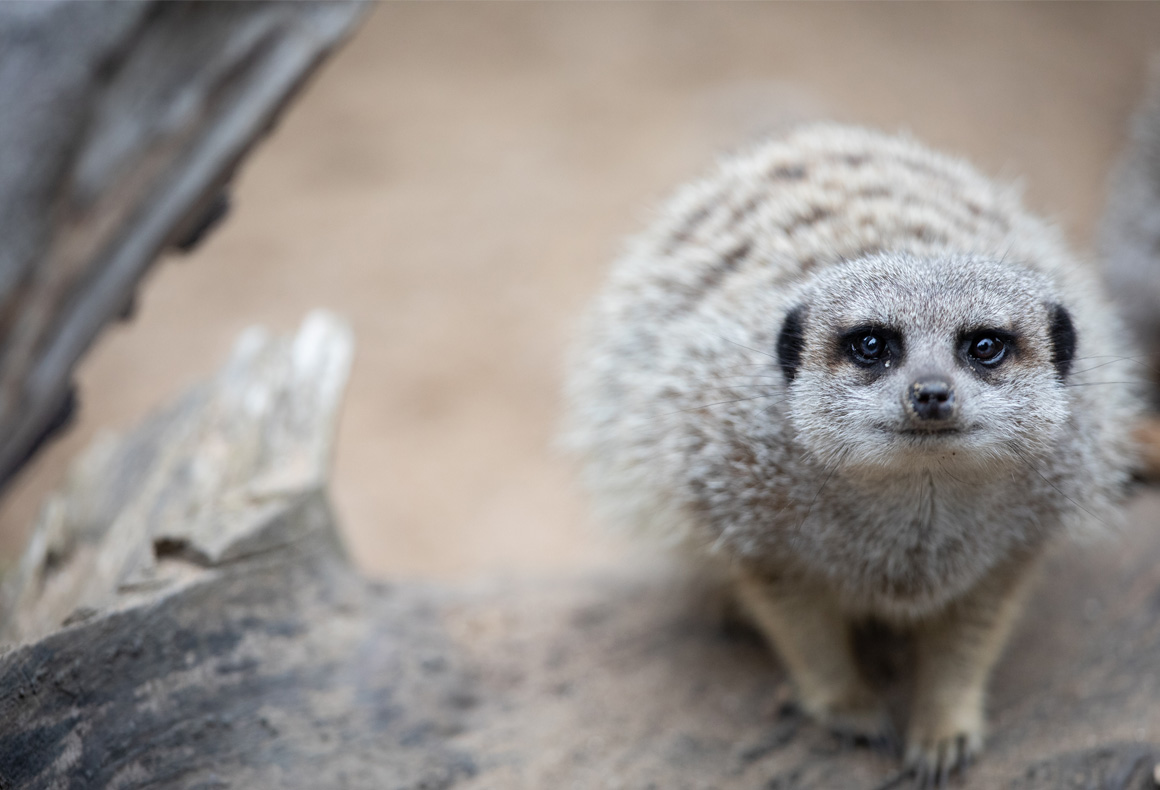
Standing up on their hind legs, meerkats have a long, slender body of approximately 35cm and their tail can be up to 25cm long. Adults can weigh up to approximately 900 grams.
-
Introduction
-
Conservation
Meerkats are classified as least concern.
Threats to populations include habitat loss and trapping for the pet trade. -
Habitat
Meerkats play a key role in the ecosystem that they inhabit. Their diet consists mainly of insects and so they keep populations of pests at bay. They are also a vital food source for predators in the ecosystem.
They live in warm, dry habitats such as deserts and dry grasslands. -
Fun Facts
When looking out for predators, the sentinel gives a distinctive bark to sound an alarm and the mob will flee into their burrows for protection. Sentinel rotation occurs throughout the day, among members of the group.
Meerkats are cooperative breeders, meaning helpers in the group, will assist in raising young that are not their own.